
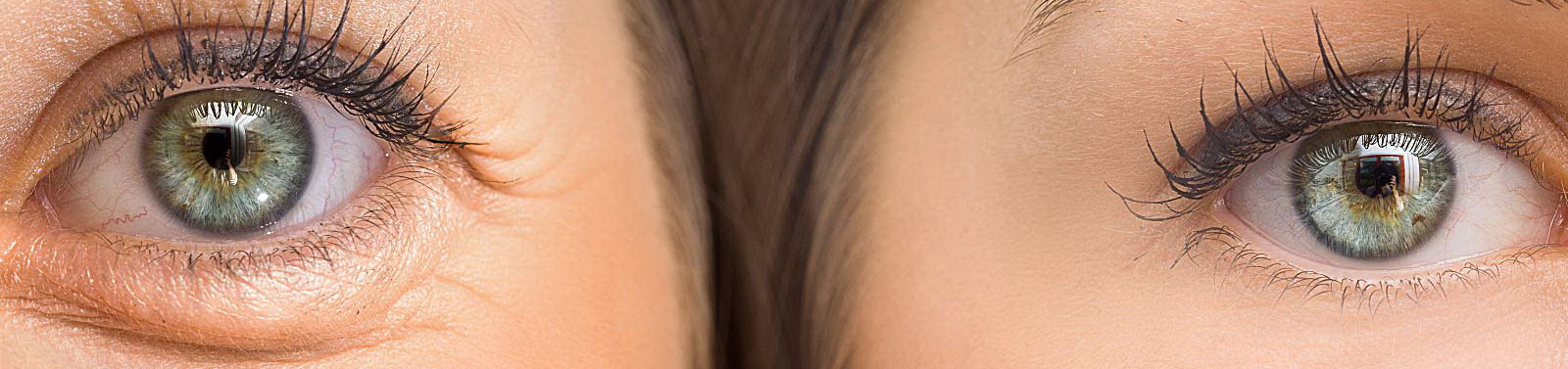
Treatment for Hollow Eyes
Under Eye Fillers: Treatment for Hollow Eyes, Tear Troughs, and Slight Eye Bags
Hollow Eyes/ Tear Trough
The under eye area may have a hollowed look due to genetics, volume loss due to aging, or from environmental and health factors such as excessive sun exposure, or habits such as cigarette smoking that can affect the skin internally and externally. Hollowness can affect the whole under eye area all the way to the upper cheeks, or just the small area directly below the eyes called the tear trough.
A particular benefit of using a hyaluronic acid filler is that if the need arises, the procedure can be reversed. The hyaluronic acid fillers can be dissolved with the enzyme hyaluronidase for complete reversal and safe absorption by the body.
Platelet-Rich Plasma (PRP) for Under Eye Skin Discoloration and Thickness
Dr. Israt Jahan often combines a cosmetic filler with platelet-rich plasma (PRP) under the eyes for a synergistic benefit of improving skin quality, color, volume, and also to potentially extend the effect of the filler. Platelet-rich plasma is derived from the patient’s own blood, which is spun down to separate red blood cells, and the concentrated plasma containing various growth and healing factors which are important to heal cuts and wounds. The concentration of these growth and healing factors stimulate collagen, stimulate the creation of new blood vessels, improve circulation, and improve skin thickness and volume. PRP improves the quality and health of lower eyelid skin affected by pigmentation issues and iron deposits that cause discoloration.
Under Eye Hollowing can also be Caused by the Cheeks
Some cases of hollow under eyes, and asymmetry between both sides of the face may not be due to hollow tear troughs, but from volume deficiency in the upper cheeks. The upper cheeks can have a volume difference from natural asymmetry of one side from the other, or from volume loss due to aging. In such cases, adding volume with a filler at the tear trough may not be effective enough, and can be problematic as there is no “shelf” of the upper cheek to support the volume
Volume deficiency at the upper cheek is treated differently than the tear trough. Skin at the cheek is much thicker than thin eyelid skin, and the cheek is also backed by the more rigid cheekbone. A thicker hyaluronic acid filler such as Juvederm Voluma can be used in the cheeks. These thicker fillers for the cheeks also last much longer than tear trough fillers – up to 1-2 years, respectively.
More Resources
List of resources you may like